
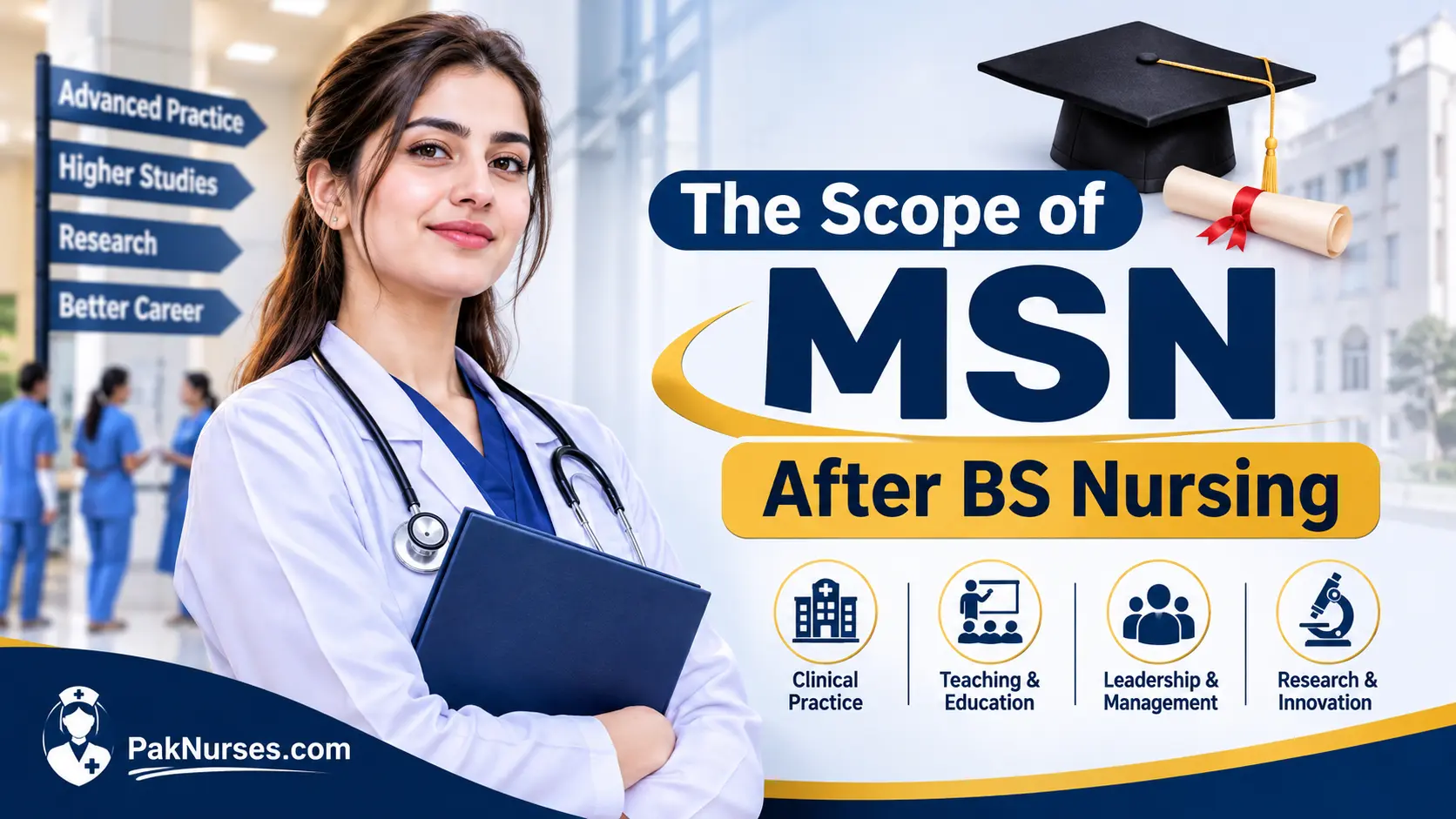
Choosing the scope of MSN after BS Nursing is one of the biggest decisions a nurse in Pakistan can make. A Master of Science in Nursing (MSN) takes you beyond bedside care into teaching, leadership, research and specialist practice. At PakNurses, a team of nurse professionals writes free exam-preparation resources, and this guide explains what an MSN is, who can apply, the career options it opens and what to think about before you enroll.
What Is an MSN?
An MSN is a postgraduate degree for nurses who already hold a four-year BS Nursing (BSN). It builds advanced knowledge in a chosen field, trains you in research and evidence-based practice, and prepares you for senior roles. That is why the scope of MSN after BS Nursing is so wide. Programs usually run for about two years, and many combine coursework, clinical practice and a research project or thesis.
Who Can Apply for an MSN?
Entry rules differ between universities, so always read the latest admission notice. Common requirements include:
- A BS Nursing (generic or post-RN) degree from a recognized institution
- Valid registration with the Pakistan Nursing and Midwifery Council (PNMC)
- A minimum CGPA or division, plus an entry test and interview
- In some programs, one or more years of clinical experience
Many MSN entry tests cover core nursing subjects, so revise with our Fundamentals of Nursing MCQs, Anatomy and Physiology MCQs and Pharmacology MCQs.
Popular MSN Specializations
The options depend on the university, but the most common areas are:
- Adult health and medical-surgical nursing
- Child health (pediatric) nursing
- Women’s health and maternal-newborn nursing
- Community and public health nursing
- Mental health (psychiatric) nursing
- Nursing education
- Nursing leadership and management
Choose the field that matches the job you want, because it shapes the roles you can apply for afterwards.
Career Options: The Scope of MSN After BS Nursing
1. Nursing Faculty and Educator
The scope of MSN after BS Nursing starts with teaching, because nursing colleges and universities need qualified teachers. A master’s degree is usually the base qualification for lecturer and instructor posts, and it is a strong advantage for clinical instructor roles. Future educators can keep their subject knowledge fresh by reading study guides on the PakNurses blog.
2. Clinical Specialist
Hospitals value nurses with advanced knowledge in areas such as critical care, oncology or pediatrics. In these roles you guide staff, set practice standards and manage complex cases.
3. Nursing Leadership and Management
Nurse managers, matrons, nursing supervisors and directors of nursing need planning, budgeting, quality and staffing skills. These are core parts of an MSN in management. You can practice related questions in our Nursing Leadership and Management MCQs.
4. Research and Quality Improvement
Hospitals, universities and research organizations need nurses who can design studies, collect data and turn evidence into better patient care.
5. Public Health and NGOs
Community health programs, NGOs and international health organizations hire nurses with advanced training to plan, run and evaluate health projects. Revise the basics with our Community Health Nursing MCQs.
6. Opportunities Abroad
A master’s degree strengthens your profile when you apply for jobs or further study overseas. Requirements differ by country, so check each regulator’s rules. If you plan to work in the United States, you will also need to pass the NCLEX, and our NCLEX practice questions can help you prepare.
Benefits of an MSN
- More responsibility and respect: advanced training prepares you to lead teams and make complex decisions.
- Better access to senior posts: many senior and teaching positions ask for a master’s degree, so check the requirements in each job advertisement.
- Research skills: you learn to read, judge and apply evidence in daily practice.
- A pathway to a PhD: an MSN is the usual step toward doctoral study and an academic career.
- More options: you can move between hospitals, universities, NGOs and international roles.
Things to Consider Before You Enroll
An MSN is a serious investment, so weigh the scope of MSN after BS Nursing against these points first:
- Cost and time: check the fee, the schedule and whether your employer allows study leave.
- Workload: balancing shift duty with coursework and research is demanding.
- Job availability: not every hospital has posts that require an MSN, so plan the role you want before you choose a specialization.
How to Choose the Right MSN Program
- Confirm that the program is recognized by PNMC, which publishes a list of recognized institutes, and by the Higher Education Commission (HEC).
- Match the specialization to your career goal.
- Ask about faculty experience, clinical placements and research support.
- Compare fees, duration and class timings.
- Ask recent graduates where they work now.
Final Thoughts
The scope of MSN after BS Nursing is wide, from teaching and clinical leadership to research and public health. If you want to grow beyond bedside care, a recognized master’s program can open doors that a bachelor’s degree alone may not. Check the latest admission details with the university and PNMC, plan your specialization carefully, and keep your exam skills sharp with free nursing MCQs on PakNurses. You can learn more about PakNurses, or contact us with questions and suggestions.
This article is an educational guide. Always confirm eligibility, fees and program recognition with the university, PNMC and HEC before you apply.
Leave a Reply